this topic was chosen courtesy of Suzaaaay! (:
softly, slowly, subtly, veins and chloroplast falling apart
margin, petiole, edges and blades,
slicing through the blood-like air, dense and dark and neat and
running.
roots, tunnels to let free insecurities and tears and floodwater
trichomes to brush away, phyllosphere to house inside,
tendrils to extend and conquer and climb up these chilly wooden walls
of this chilly wooden house
where people inside are all chilly, wooden people.
they don't move, they don't cry, they don't extend;
but I need a place to move, to cry, to extend.
but I need a place to free insecurities and tears and floodwater,
so
save me a place
inside this collection of mesophyll and phloem.
save me a spot.
Showing posts with label writing. Show all posts
Showing posts with label writing. Show all posts
Monday, 4 July 2011

Tuesday, 28 June 2011
A little detour!
Instead of updating everyone who reads this little train trip into my mind on the psychology of language, which I will be coming back to, in my next few posts, I will talk today, about what I learned from my road trips up north as a kid.
I used to go on road trips up north a lot, and every single time we'd pass a visitor's site, we'd pile out of the car to get a glimpse of the view. Sometimes, we'd see these, and I'd always press my parents to give me a couple dollars to pop into the viewing machi ne to see what truly lurked in the forests, or along the horizon. They always shook their heads and said that it wasn't even worth it, that it would be better just to really see for myself why it was so special. One time, they gave me the amount of money needed to look into these, and I ran away to push the dollars into the machine. But once I looked through, it was somewhat of a disappointment. Sure, it let me get a close-up view, but I couldn't see everything. I could only see out-of-focus details, not what made up the beauty that was in front of me. So yes, seeing the big picture, seeing how everything melted fantastically in front of me, was worth so much more than just seeing the little things, than just magnifying the tiny details and getting them out of focus anyway.
What I mean to say by this, is, that sometimes we should just look up, get out from under these machines, and just look at a situation, or just look at our world around us, for ourselves. For the sake of our happiness, for the sake of stopping and smelling the roses. To just straighten up and view something for what it is, and to stop poring over the slightest detail, when perhaps it is nothing but trivial. To fully appreciate what we have, and to look at the full picture before immediately judging others or ourselves, or instantaneously feeling the need to prove and solve a problem ourselves. Maybe we just need a tiny step back... Maybe we need to stop and smell these roses.
Friday, 24 June 2011
Words.
All my life, I have been intrigued with words. They beguile me, enchant me, hypnotize me. All words derive from the same alphabet, same coding, same strokes of a pen. They express needs, wishes, desires, delight, frustration - essentially, emotion.
We are told stories every day - on the phone, perhaps about one's day; through the Internet, about one's life or idiosyncrasies; in real life, about events or ideas; on paper, through supporting arguments and theses.
We were taught, in grade scho ol, that there are four types of sentences: to persuade one to take action, to exclaim one's thoughts, to explain one's ideas, and to ask what one wishes to know. Are these like the multiplication, division, subtraction and addition that we memorized, that build up the foundation upon which we construct our mathematical formulas and hypotheses? It is beautiful to see that whatever we have learned, we can always build upon.
It is also beautiful that through reading one's writing, I can always experience what they experience; learn what they learn; see, perhaps feel, how they feel. It is an amazing feeling to get pulled into a piece of fantastic fiction, and to worry for the protagonist's state. It is empowering to read about a journey for someone else, about said person overcoming an obstacle, because through their memoir, one can relate and make connections to oneself. It feels relieving to form one's opinion of the events stated in a news article and to perhaps sign one's name on a petition.
Perhaps that is why I will always be an advocate for education and literacy everywhere.
But enough gushing about the beauty of words; in my next post, I will talk about the psychology of language (or what I know of it.)
We are told stories every day - on the phone, perhaps about one's day; through the Internet, about one's life or idiosyncrasies; in real life, about events or ideas; on paper, through supporting arguments and theses.
We were taught, in grade scho
 ol, that there are four types of sentences: to persuade one to take action, to exclaim one's thoughts, to explain one's ideas, and to ask what one wishes to know. Are these like the multiplication, division, subtraction and addition that we memorized, that build up the foundation upon which we construct our mathematical formulas and hypotheses? It is beautiful to see that whatever we have learned, we can always build upon.
It is also beautiful that through reading one's writing, I can always experience what they experience; learn what they learn; see, perhaps feel, how they feel. It is an amazing feeling to get pulled into a piece of fantastic fiction, and to worry for the protagonist's state. It is empowering to read about a journey for someone else, about said person overcoming an obstacle, because through their memoir, one can relate and make connections to oneself. It feels relieving to form one's opinion of the events stated in a news article and to perhaps sign one's name on a petition.
Perhaps that is why I will always be an advocate for education and literacy everywhere.
But enough gushing about the beauty of words; in my next post, I will talk about the psychology of language (or what I know of it.)
Friday, 10 June 2011
A Lament for the Winter.
these lonely streets both wistful and indulgent;
neglectful, tolerant. effervescent, rollicking.
soft whispers that resonate.
frozen to perfection: every droplet manipulated,
every shivering leaf gently placed,
every quivering tree deliberately silenced.
the muted air disorienting.
Friday, 3 June 2011
Le Chateau de Versailles.
I really want to start educating myself on things I love. I want to start developing my interests again, and to start thinking for myself. To start catching up on news again, and formulating my own opinions. I want to know more about everything, so I did a little research. Did you know that originally, Chateau de Versailles was originally a hunting lodge built by King Louis XIII of France? However, Louis XIV built the palace on this site, including the Grand Apartments of the King and Queen. Louis XV th en built the Chapel and Opera.
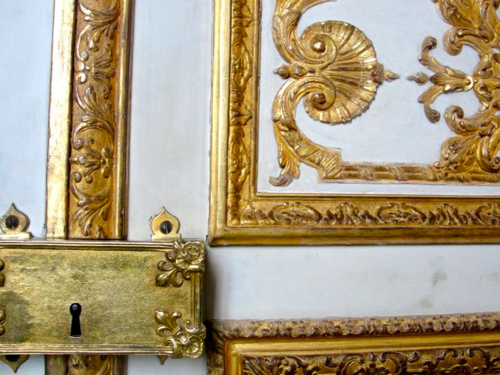 en built the Chapel and Opera.
The courts of Versailles were actually the place of ultimate political power, from 1682 to 1789. However, with the start of the French Revolution, the royal family had to go back to the capital, Paris. Originally, the names of the rooms for the Grande Appartement du Roi were based after Roman gods and goddesses as follows:
-Salon de Diane (for the goddess of the hunt)
-Salon de Mars (for the god of war)
-Salon de Mercure (god of trade, commerce and Liberal Arts)
-Salon d'Apollon (for the god of Fine Arts)
-Salon de Jupiter (god of law and order)
-Salon de Saturne (god of agriculture and harvest)
and -Salon de Venus (goddess of love and beauty)
Wednesday, 1 June 2011
the world is a beautiful thing--a life philosophy.
Just because I haven't posted in a long time, I'll just post a little thought of mine, about life and what I've learned about it.
the world is yours for the taking,
because we belong to the world, and the world belongs to us.
 everything is a divine creation, and yet
everything was once a star.
the world is beautiful and bright and dark and hard and firm and strict and soft and pretty and dim and quiet and loud and ugly and perfect and whimsical and tacky and elegant and boasting and arrogant and contradictory and hypocritical and controversy-inducing and high and low and weird and normal and comical and sad and happy and breathtaking and painful and amazing and filthy and despicable and horrible and everything good, bad and in between.
so take it and hate it and love it and know it and ignore it and do everything you want in it
because this world is yours and mine and theirs.
it’s life, it’s everything;
it’s only life. it’s nothing.
the world is yours for the taking,
because we belong to the world, and the world belongs to us.
 everything is a divine creation, and yet
everything was once a star.
the world is beautiful and bright and dark and hard and firm and strict and soft and pretty and dim and quiet and loud and ugly and perfect and whimsical and tacky and elegant and boasting and arrogant and contradictory and hypocritical and controversy-inducing and high and low and weird and normal and comical and sad and happy and breathtaking and painful and amazing and filthy and despicable and horrible and everything good, bad and in between.
so take it and hate it and love it and know it and ignore it and do everything you want in it
because this world is yours and mine and theirs.
it’s life, it’s everything;
it’s only life. it’s nothing.
Tuesday, 17 May 2011
nostalgia, con't con't.
Okay, so let's discuss short term memory!
We usually hear many people talk about "short term memory loss". They say, "Oh, dear, my memory's horrible. I have short term memory loss."
We usually hear many people talk about "short term memory loss". They say, "Oh, dear, my memory's horrible. I have short term memory loss."
Short term memory allows us to remember ideas, or thoughts, for several seconds without intentional rehearsing. When at Bell Laboratories, George Miller conducted experiments, explaining that short term memory can only store 7±2 items. Did you know that humans can only remember on demand: seven digits, six letters and five words after a presentation?
Mr. Miller's belief is that the working memory can only hold 2 seconds of sound, while the memory span of youth is seven items.
However, it is believed, now, that short term memory actually holds an even lower amount of items--from 4 to 5.
It is easier, however, to increase the amount of things someone can remember, by chunking. Now, what is chunking? Chunking is when one groups individual items of information together. For example, a phone number is expected to be remembered, one usually chunks the area code, then groups the first three numbers, then the last four, or they group the number into two pieces.
Short term memory is usually dependent on what is heard, rather than what is seen. It was found that subjects found remembering letters that sounded the same, quite hard to differentiate. This suggests that the letters were first memorized through hearing rather than visualizing. However, this generalization/assumption cannot be proven.
So there you go.
A quick run-over of the Short Term Memory!
Saturday, 14 May 2011
con't.
So this is a continuation of last time's post on memories and nostalgia.
Anyway, so I'll just quickly inform you on the use and workings of our brain in order to help us process memory.
These are the three types of memory: long-term, short-term, and sensory.
Sensory memory is memorization. It is perceiving something through one of your five senses. When one is trying to memorize something that is visual, or uses taste, etc., usually the FULL memory only lasts for 200-500 milliseconds. Sensory memory was first experimented on by George Sperling, who used the "partial report paradigm", where the experimentees were given a grid of three rows of four letters. With this experiment, Sperling showed that immediate sensory memory was all 12 items, but within a couple hundred milliseconds, the memory faded away. This is possibly why when I look at a rose, when I see dust motes, I try to commit them to memory, but I cannot because it grows fainter so easy.
This shall be continued next time! :)
Thanks for reading, lovelies.
Anyway, so I'll just quickly inform you on the use and workings of our brain in order to help us process memory.
These are the three types of memory: long-term, short-term, and sensory.
Sensory memory is memorization. It is perceiving something through one of your five senses. When one is trying to memorize
 something that is visual, or uses taste, etc., usually the FULL memory only lasts for 200-500 milliseconds. Sensory memory was first experimented on by George Sperling, who used the "partial report paradigm", where the experimentees were given a grid of three rows of four letters. With this experiment, Sperling showed that immediate sensory memory was all 12 items, but within a couple hundred milliseconds, the memory faded away. This is possibly why when I look at a rose, when I see dust motes, I try to commit them to memory, but I cannot because it grows fainter so easy.
This shall be continued next time! :)
Thanks for reading, lovelies.
Subscribe to:
Posts (Atom)